
Montessori at Home: Cultivating Independence and Curiosity in Your Child
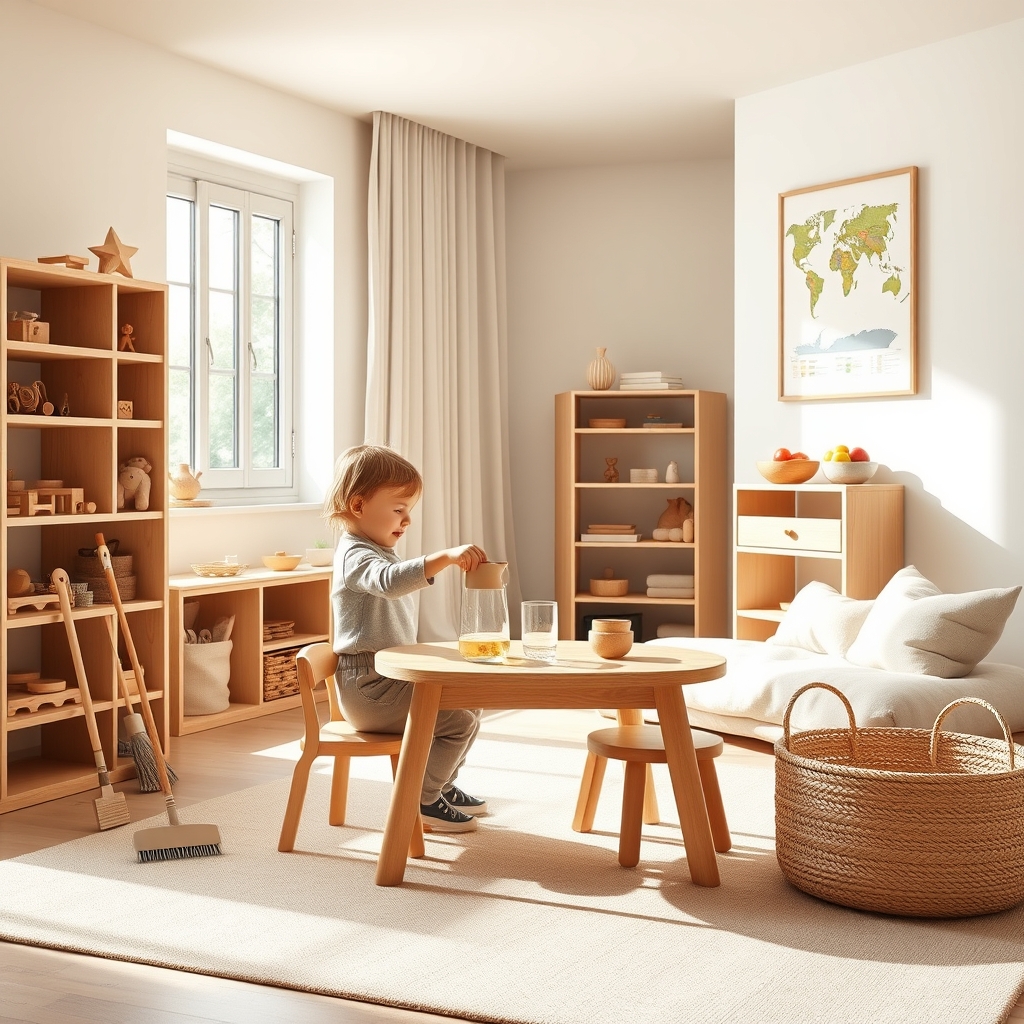
Bringing the Montessori method into your home is more than just a trend—it’s a transformative approach to nurturing your child’s natural desire to learn, explore, and grow. Rooted in the philosophy of Dr. Maria Montessori, this method emphasizes independence, hands-on learning, and respect for a child’s individual development. The beauty of Montessori lies in its simplicity: it doesn’t require expensive materials or a complete home overhaul. Instead, it invites parents to create an environment where children can thrive at their own pace, guided by curiosity and a sense of accomplishment.
Understanding the Montessori Philosophy
At the heart of Montessori is the belief that children learn best when they are actively engaged in their environment. Unlike traditional education models that rely on direct instruction, Montessori encourages self-directed activity, where children choose their tasks and work at their own rhythm. This approach fosters not only academic skills but also critical life skills like problem-solving, concentration, and self-discipline. The role of the parent or caregiver shifts from instructor to observer and facilitator, providing support only when necessary and allowing the child to take the lead in their learning journey.
Montessori also places a strong emphasis on the prepared environment. This means designing spaces that are accessible, orderly, and tailored to the child’s developmental stage. For example, a toddler’s play area might include low shelves with a few carefully selected toys, a child-sized table and chair, and materials that encourage fine motor skills, such as stacking blocks or pouring activities. The goal is to create a space where the child feels empowered to explore independently, without constant adult intervention.
Practical Ways to Implement Montessori at Home
Create Child-Accessible Spaces
One of the simplest yet most impactful ways to embrace Montessori at home is by making everyday items accessible to your child. This could mean installing low hooks for coats and bags, placing a small step stool in the kitchen so they can reach the sink, or setting up a low shelf in the refrigerator with healthy snacks they can grab on their own. When children can access what they need without asking for help, it builds confidence and fosters a sense of autonomy. It also reduces frustration for both the child and the parent, as the child learns to take responsibility for their needs.
Choose Open-Ended and Purposeful Toys
Montessori toys are often simple, made from natural materials, and designed to serve a specific developmental purpose. Unlike flashy, battery-operated toys that do the work for the child, Montessori materials encourage active engagement. For example, a set of wooden stacking rings teaches hand-eye coordination, size differentiation, and problem-solving. A puzzle with knobs helps develop fine motor skills and spatial awareness. When selecting toys, ask yourself: Does this toy allow my child to explore, create, and problem-solve? If the answer is yes, it’s likely a good fit for a Montessori-inspired home.
It’s also important to rotate toys regularly. Too many options can overwhelm a child and lead to shorter attention spans. By offering a few carefully chosen toys at a time, you encourage deeper engagement and mastery of skills. Store the rest out of sight and bring them out periodically to keep the environment fresh and exciting.
Incorporate Real-Life Activities
Children are naturally drawn to the activities they see adults doing, and Montessori encourages parents to involve them in real-life tasks. These activities, often referred to as “practical life” exercises, include things like pouring water, sweeping the floor, washing vegetables, or folding laundry. While these tasks might seem mundane to adults, they are incredibly engaging for children. They provide opportunities to develop fine and gross motor skills, hand-eye coordination, and a sense of responsibility.
Start with simple tasks and break them down into manageable steps. For example, if you’re teaching your child to set the table, begin by showing them how to carry one plate at a time. Use child-sized tools, like a small broom or a lightweight pitcher, to make the tasks more accessible. Praise their efforts, not just the results, to build their confidence and motivation. Over time, these activities will become second nature, and your child will take pride in contributing to the household.
Encouraging Independence Through Routine
Routine is a cornerstone of the Montessori method. Predictability gives children a sense of security and helps them understand what to expect next. This, in turn, allows them to take more initiative in their daily activities. For example, if your child knows that after breakfast they help clear their plate and then choose an activity, they’ll begin to take ownership of this routine. Over time, they’ll start doing these tasks without prompting, which is a powerful way to build independence.
To create a Montessori-friendly routine, involve your child in the process. Use visual aids like picture charts or simple checklists to outline the steps of their morning or bedtime routine. For younger children, a visual schedule with images of brushing teeth, getting dressed, and eating breakfast can be incredibly helpful. As they grow, they’ll internalize these routines and begin to follow them independently.
The Role of Positive Reinforcement
Positive reinforcement is a key component of the Montessori approach. Instead of praising the outcome (e.g., “Great job!”), focus on acknowledging the effort and process (e.g., “I noticed how carefully you stacked those blocks”). This type of feedback encourages children to take pride in their work and motivates them to keep trying, even when a task is challenging. It also helps them develop a growth mindset, where they see mistakes as opportunities to learn rather than failures.
Avoid using rewards like stickers or treats, as these can undermine intrinsic motivation. Instead, let the satisfaction of completing a task be its own reward. For example, if your child successfully pours their own juice, the sense of accomplishment they feel will be far more meaningful than any external reward. This approach helps children develop a lifelong love of learning and a strong sense of self-worth.
Adapting Montessori for Different Ages
Montessori isn’t just for toddlers—it can be adapted for children of all ages, from infants to teenagers. For infants, the focus is on creating a safe, stimulating environment where they can explore freely. This might include a floor bed (instead of a crib) to encourage movement, a mirror at their level to promote self-awareness, and soft, textured toys to stimulate their senses. As they grow, you can introduce more complex activities, like sorting objects by color or size, or simple puzzles that challenge their problem-solving skills.
For older children, Montessori principles can be applied to homework, chores, and even screen time. Encourage them to take ownership of their learning by setting their own goals and managing their time. Provide them with tools to organize their space and materials, and involve them in family decisions, like planning meals or outings. The goal is to help them develop the skills they’ll need to navigate the world with confidence and independence.
Bringing Montessori into your home is a journey, not a destination. It’s about creating an environment where your child feels respected, capable, and empowered to explore the world around them. It’s not about perfection—there will be days when the toys are scattered, the routines go out the window, and the practical life activities end in spills or messes. But those moments are part of the process. What matters most is the mindset: seeing your child as a competent, curious individual who is capable of great things. When you approach parenting with this perspective, you’ll find that Montessori isn’t just a method—it’s a way of life that nurtures both you and your child.