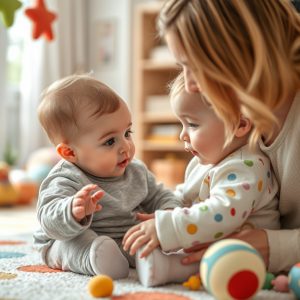
The Unseen Curriculum: How Play-Based Learning Environments and Baby-Led Developmental Milestones Redefine Early Childhood Education
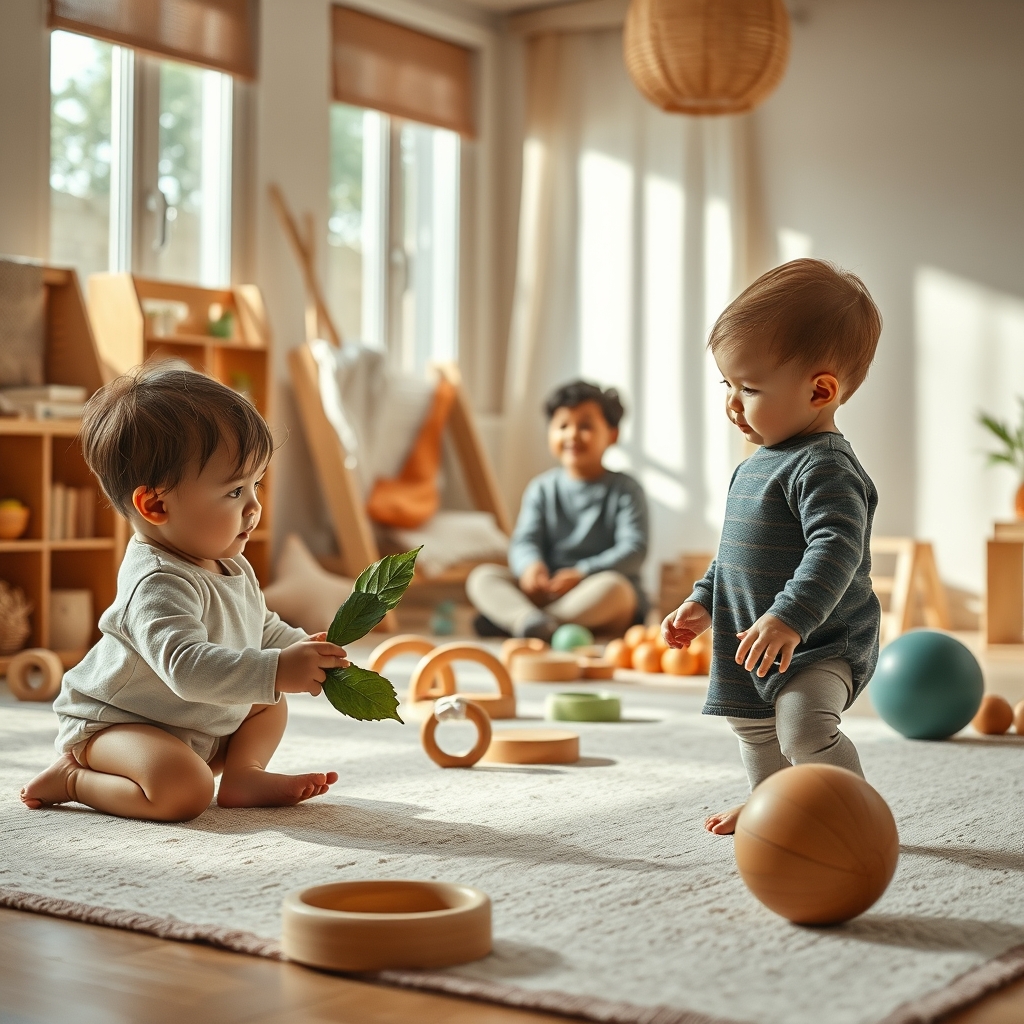
The modern paradigm of early childhood education is undergoing a quiet revolution, one that dismantles rigid frameworks in favor of organic, child-centered growth. At the heart of this shift lies the recognition that infants are not passive recipients of care but active participants in their own development. Play-based learning environments and baby-led developmental milestones are not mere pedagogical trends; they are evidence-based approaches that align with the neurobiological realities of how infants learn, adapt, and thrive. Yet, their implementation remains uneven, often diluted by institutional inertia or misinterpreted as laissez-faire parenting. The truth is far more nuanced—and far more critical.
The Neurobiology of Play: Why Unstructured Exploration Matters
Neuroscience has long established that the infant brain is a dynamic, experience-dependent organ. Synaptic pruning, myelination, and neural pathway formation are not abstract processes but tangible outcomes of sensory input, motor exploration, and social interaction. Play-based learning environments leverage this biology by creating spaces where infants can engage with their surroundings on their own terms. A child who stacks blocks is not merely “playing”—they are refining fine motor skills, experimenting with spatial relationships, and developing problem-solving strategies. The absence of adult-imposed structure does not equate to chaos; rather, it allows for the emergence of intrinsic motivation, a cornerstone of lifelong learning.
Critics argue that unstructured play lacks measurable outcomes, but this perspective ignores the granular, cumulative nature of infant development. A baby who repeatedly drops a spoon from a high chair is not being mischievous; they are conducting a physics experiment, testing gravity, cause-and-effect, and object permanence. These micro-experiences, repeated thousands of times, lay the groundwork for abstract reasoning later in life. The challenge for caregivers and educators is not to direct these moments but to recognize their significance and provide an environment rich enough to sustain them.
Baby-Led Milestones: The Myth of the Universal Timeline
The conventional approach to developmental milestones operates on a flawed assumption: that all infants progress along a linear, predictable trajectory. Pediatric checklists reinforce this illusion, reducing the complexity of human development to a series of checkboxes. Yet, research in neurodevelopmental care practices reveals a far more individualized process. Some infants crawl at six months; others skip crawling entirely and move straight to walking. Some babble early but take longer to form words; others remain quiet until they suddenly speak in full sentences. These variations are not deviations—they are expressions of unique developmental pathways.
Baby-led developmental milestones reject the one-size-fits-all model in favor of responsive observation. Instead of coercing an infant into sitting, crawling, or walking on a predetermined schedule, caregivers are encouraged to follow the child’s cues, providing support only when necessary. This approach is not about passive permissiveness but about respecting the infant’s autonomy while remaining attuned to their needs. A child who is given the space to explore movement at their own pace develops not only physical strength but also confidence and self-regulation. The danger of rigid milestone expectations is not just that they create unnecessary anxiety for parents but that they can lead to interventions that disrupt natural developmental processes.
The Role of Responsive Caregiving in Play-Based Learning
Play-based learning and baby-led milestones do not exist in a vacuum. Their effectiveness hinges on the presence of responsive caregiving—a dynamic, reciprocal relationship where the adult’s role is to observe, scaffold, and adapt rather than control. This is not a hands-off approach but a highly engaged one. A caregiver who notices an infant’s fascination with a particular toy does not redirect their attention but instead provides variations of that stimulus, deepening the learning experience. Similarly, a child who struggles to grasp an object may benefit from a caregiver gently adjusting their hand position, offering just enough support to foster success without taking over the task.
This level of attunement requires a departure from traditional parenting scripts, where adults often default to directive behavior. Responsive caregiving demands patience, flexibility, and a willingness to cede control. It also requires an understanding of the difference between support and interference. For example, placing an infant in a sitting position before they can do so independently may accelerate a milestone but deprives them of the opportunity to develop the core strength and balance that come from self-initiated movement. The goal is not to rush development but to create the conditions where it can unfold organically.
The Institutional Barriers to Holistic Early Childhood Growth
Despite the growing body of evidence supporting play-based learning and baby-led milestones, institutional resistance persists. Daycare centers, preschools, and even some pediatric practices continue to prioritize structured activities, standardized assessments, and rigid schedules. This is partly due to logistical constraints—unstructured play requires more space, more materials, and more staff oversight. But it is also a reflection of deeper cultural biases that equate learning with visible productivity. A child who spends an hour examining the texture of a leaf is often seen as “doing nothing,” while one who completes a worksheet is praised for “learning.”
The consequences of this bias extend beyond individual classrooms. Early childhood policies are often shaped by metrics that favor quantifiable outcomes, such as literacy rates or math proficiency, over qualitative measures like curiosity, resilience, or emotional regulation. This creates a feedback loop where educators feel pressured to adopt practices that yield immediate, measurable results, even if those practices undermine long-term development. The challenge lies in shifting the narrative—from one of efficiency to one of depth, from standardization to individualization.
Reimagining Early Childhood Education: A Call for Systemic Change
The integration of play-based learning and baby-led milestones into mainstream early childhood education requires more than just pedagogical adjustments; it demands a fundamental rethinking of what we value in child development. This is not an argument for abandoning all structure but for creating environments where structure serves the child, not the other way around. It means designing spaces that invite exploration, training caregivers to recognize and respond to subtle developmental cues, and advocating for policies that prioritize holistic growth over standardized benchmarks.
The stakes are high. The first three years of life are a period of unparalleled neural plasticity, where the foundations for cognitive, emotional, and social development are laid. The choices we make during this window—whether to impose rigid timelines or trust the child’s innate curiosity, whether to prioritize compliance or creativity—have ripple effects that extend far beyond early childhood. The question is not whether play-based learning and baby-led milestones work but whether we are willing to dismantle the systems that stand in their way. The answer will shape not just individual lives but the future of education itself.
In a world obsessed with optimization and efficiency, the slow, messy, unpredictable nature of infant development is often seen as a problem to be solved. But what if it is not a problem at all? What if the very qualities we seek to control—curiosity, spontaneity, individuality—are the ones that hold the key to unlocking human potential? The challenge is not to make infants fit into our systems but to design systems that honor the way they are meant to grow.